

New York Pigeon
A morning with pigeon people.

My wife, Magdalena, has had a little bee in her little bonnet about adopting a New York City pigeon.
This special interest began about 2 years ago, right when millennials in this city started taking up urban birding.
We’ll be walking down the street, and she’ll point to a pigeon and say, Are you free? Hoping that the Pigeon Distribution System found her.
Magdalena has had two heroic pigeon-saving moments since accepting these birds into her life. One of those moments took place last Friday.
We were walking north, up West End Avenue, on our way to Central Park, when the pigeon distribution system found us.
There it was, a pigeon, in distress. He kept falling over himself, smashing his face against the concrete sidewalk every 2 or 3 steps it took.
She called the Wild Bird Fund, the local bird rescue not too far from where we were, and they told her to bring him in. Challenge accepted. So there I was, on 72nd Street, watching my wife try to catch her pigeon.
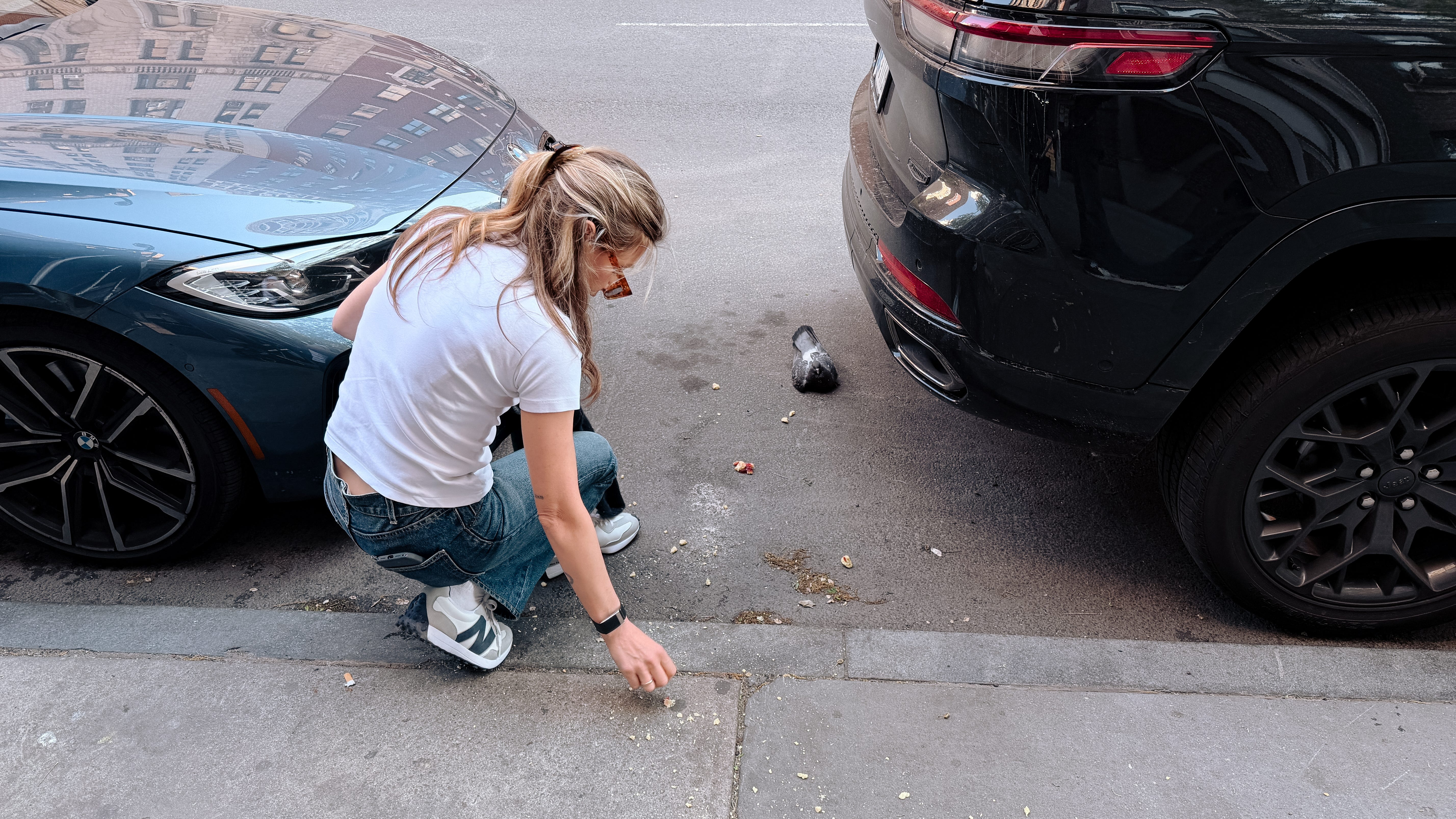
We spent twenty-five minutes feeding him crumbs from a pastry we bought from the bodega next door to distract him, while she attempted to throw her cashmere sweater over his body and scoop him up.
At one point, he threw himself into traffic, having decided that head-on traffic was preferable to whatever this human wanted.
But only in New York can you have pigeon serendipity.
Are you with the pigeon people? Magdalena asked, out of breath, to two women who were crouched down, feeding another set of pigeons around the corner.
They were. Someone had called them the day before about a pigeon with a neurological problem. We have him! she told them.
The next morning, I got an email: we were off the waitlist for the 9 am Jane’s Walk tour. The tour was called Watching New York Pigeons, and, being a wife who prides herself on paying attention to her wife’s special interests, I had booked it for us weeks ago.
Jane’s Walk is an annual festival of free, volunteer-led walking tours. It is named after Jane Jacobs, the urbanist who wrote The Death and Life of Great American Cities. The festival happens in cities all over the world, but the New York chapter is the largest. Every year, MAS, the Municipal Art Society of New York, organizes more than 200 walks across the city. They are tours for New Yorkers, by New Yorkers. You walk through a neighborhood with someone who knows it well, and they tell you what they know.
On Saturday at 9am, we met a group of other pigeon enthusiasts at the first stop on the tour, the William T. Sherman statue at 5th Ave and 59th Street. Our guide, Andrew Garn, a pigeon folklorist, was going to lead us on a tour of “iconic pigeon hangouts,” according to the listing description.
Iconic was exactly my first impression of Andrew: he’s maybe in his 60s, pigeon hat, pigeon scarf, a pigeon medallion around his neck like the Flavor Flav of pigeons, a pin on his backpack, ”I ❤️ MUSIC”. I ❤️ YOU, Andrew.
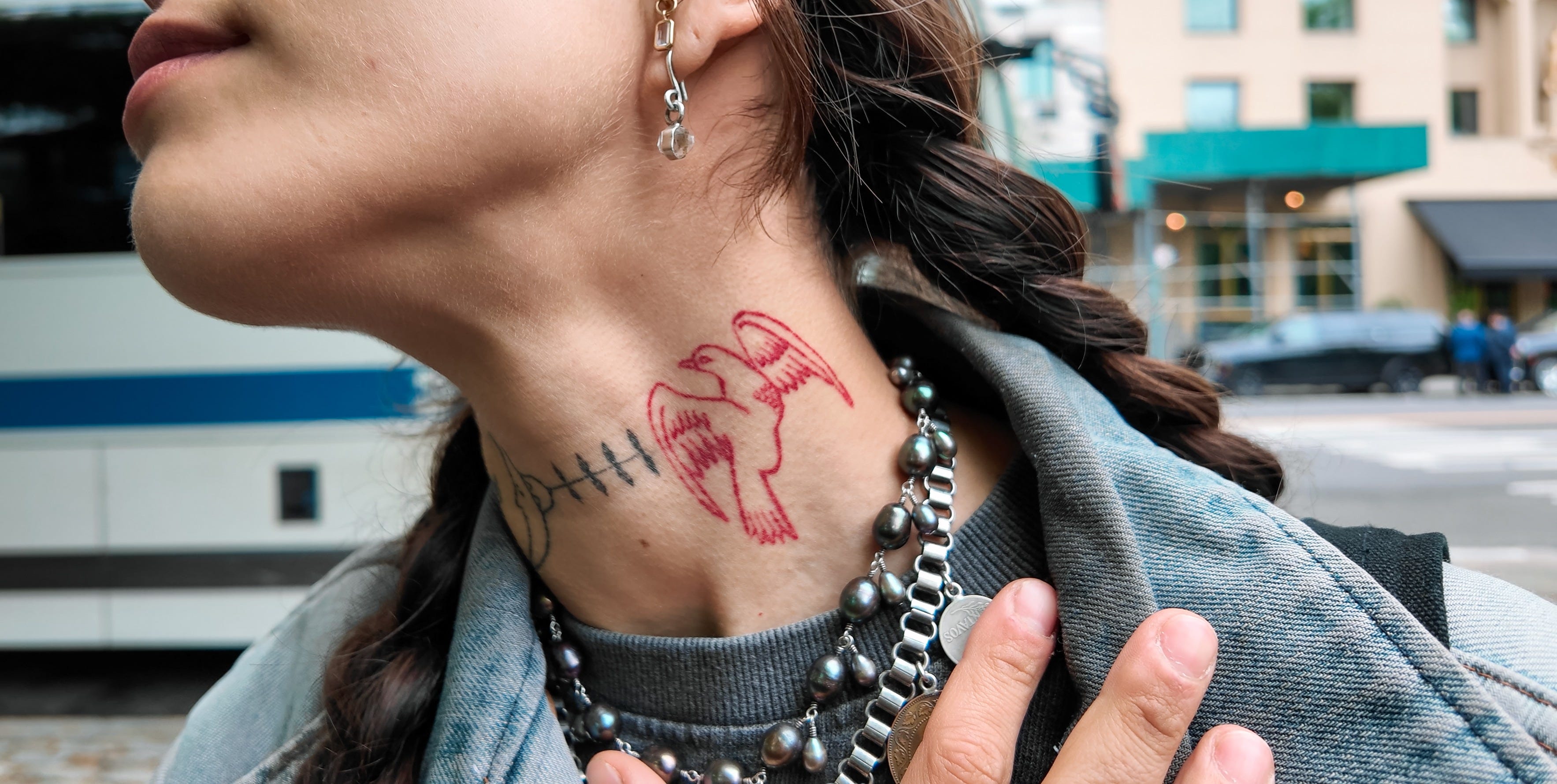
Andrew recognized the two women standing next to me and asked whether they had been on this tour before. They had, last year. As he scanned the crowd, I sensed his disappointment at the group’s lack of pigeon ephemera (fair). But the woman next to me saved the group from embarrassment by proudly sharing that she has a pigeon tattoo on her neck.
Andrew said that he loves watching pigeons because they are just like New York City. They are survivors. That they are immigrants too. He asked the group if everyone had seen the pigeon sculpture on the High Line. Everyone nodded, because of course we all had. That’s mainstream pigeon culture.*
The tour walked west along the southern edge of Central Park, from 59th and 5th to Columbus Circle. Running clubs were out. A white pickup truck was parked, with a man in the back, blaring music from his DJ set. On the lawn, a group of 10 people or so, holding 7-foot-long swords, must be a swording class? And us. Just your average slice of the NYC Saturday morning ecosystem.
The woman to my left had her iPhone notes app open the entire tour, a file called Jane’s Walk Pigeon Tour. She typed furiously as Andrew told us that the reason we see so many pigeons with foot problems is that their little toes and little feet pick up human hair, and it gets twisted around them. Magdalena asked him about racing pigeons, which she had apparently tried to buy once. This was news to me.
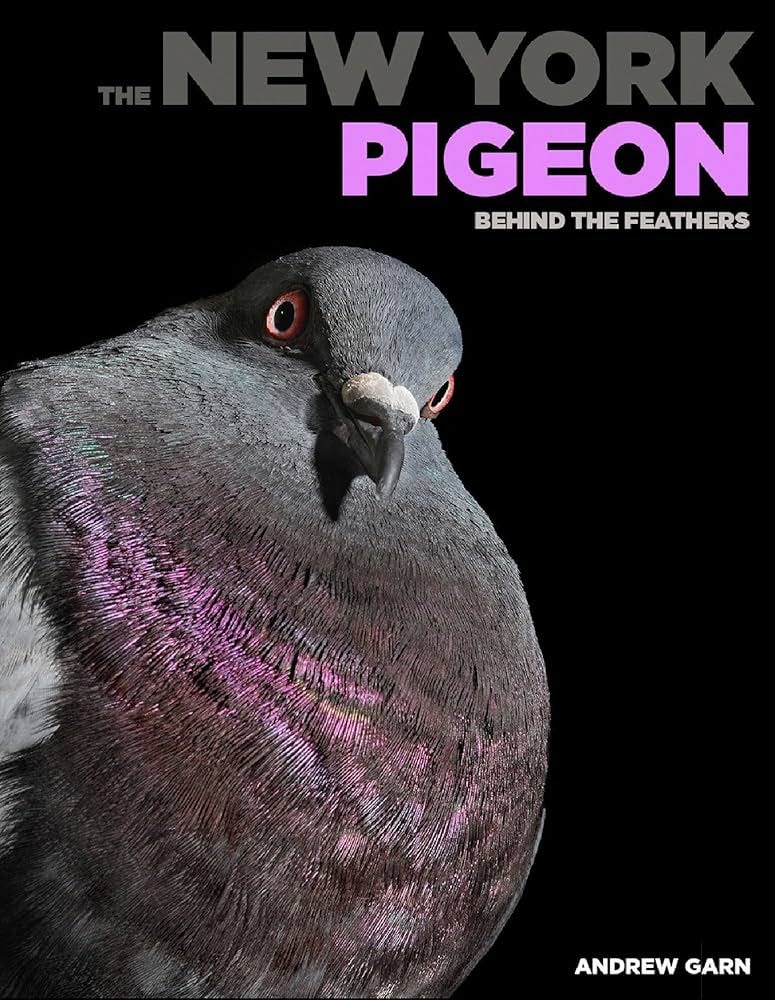
Halfway through the tour, Andrew pulled out his book, The New York Pigeon. He photographed them while working at the Wild Bird Fund. They are studio portraits of pigeons, glamour shots really, or according to his website “vogue, but for pigeons”. He nailed it.
Magdalena, hearing him mention Wild Bird Fund, was so excited as if she was in on the secret, that she had JUST called them yesterday.
On the subway home, I asked Mags if she enjoyed the tour.
I loved it, she said. Thank you.
That night, getting ready for bed, Mags found a few of my stray black curly hairs on the white bathroom sink. She demanded that I come look.
“Do you know what these do?! She said. They hurt pigeons.”
New York Pigeon
Related Links:
